Benzyl Glycidyl Ether YLD-6021: Low-Odor Epoxy Diluent
Nov 16, 2026
Benzyl glycidyl ether YLD-6021 is a monofunctional aromatic diluent at 208-228 g/eq and 2-8 mPa·s, picked for potting when colour and chloride allow. At 20 phr it lifts blend EEW so amine demand falls, not rises; the same load brings 750 ppm hydrolyzable chloride, and that number settles the choice.
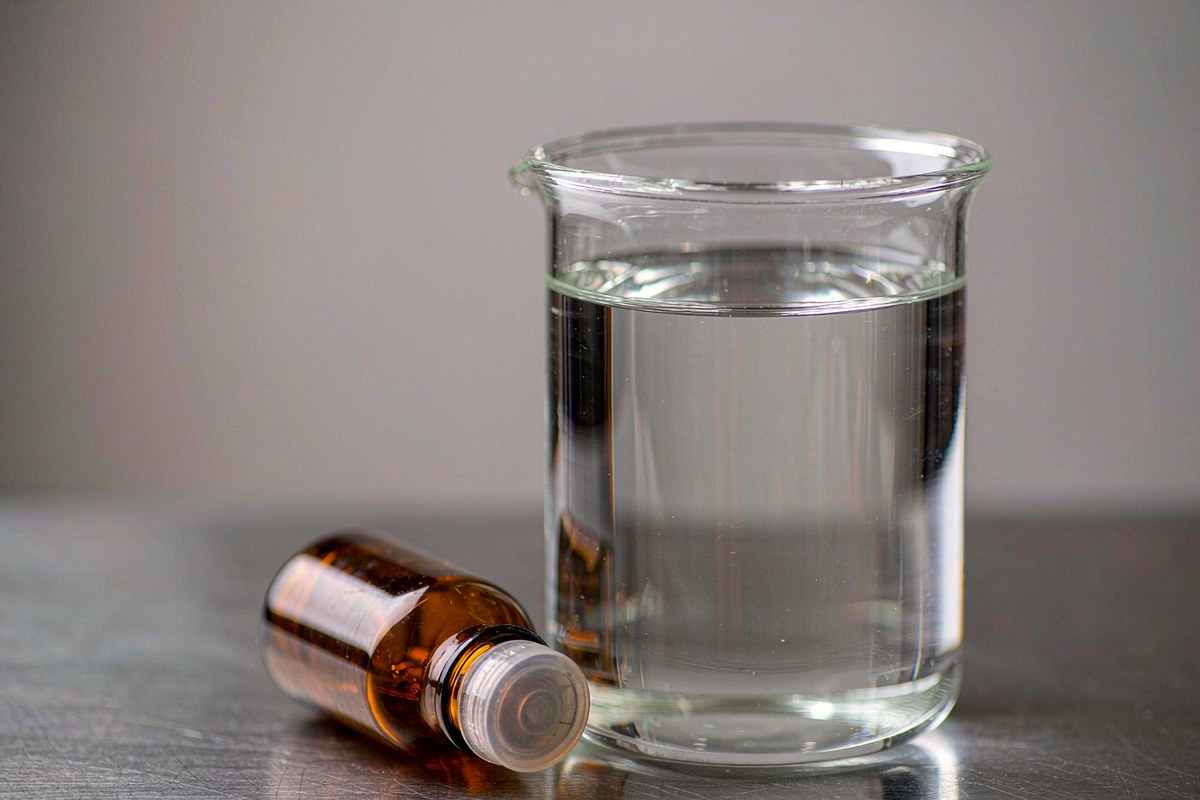
Figure 1. YLD-6021 is a water-clear liquid; the published colour ceiling is APHA 50.
1. Introduction
Viscosity limits most room-temperature epoxy work. A liquid bisphenol A resin such as YLE-128 runs at 11,000-15,000 mPa·s, too thick for potting fine windings or a brush coat without solvent. A reactive diluent lowers that figure and stays in the film.
Several diluents in this catalogue bring that figure down, and choosing between them on viscosity alone is a mistake: functionality, colour ceiling and chloride load move with the choice. This report sets benzyl glycidyl ether YLD-6021 (CAS 89616-40-0) against three of them and states the arithmetic behind each decision.
2. Materials and Methods: Benzyl Glycidyl Ether YLD-6021 Specification
2.1 Product Identification
The CAS number sits in the product page intro line, not the specification table.
Table 1. Identity of benzyl glycidyl ether YLD-6021.
Item
Information
Chemical name
Benzyl glycidyl ether
CAS No.
89616-40-0
Molecular formula
C10H12O2 (calculated)
Molecular weight
164.20 g/mol (calculated)
Theoretical EEW
164.2 g/eq, one oxirane per molecule (calculated)
Appearance
Transparent liquid
Package
Drum
2.2 Specification Data and Test Methods
Seven parameters are published, with no cure data and no thermal properties.
Table 2. Published specification of YLD-6021 with the method applied to each parameter.
Parameter
Published value
Method
Colour, APHA
Max. 50
APHA scale
Viscosity at 25 °C, mPa·s
2-8
ASTM D445
EEW, g/eq
208-228
ASTM D1652, ISO 3001
Hydrolyzable chloride, %
Max. 0.2
Titration
Inorganic chlorine, ppm
Max. 50
Titration
Water, %
Max. 0.1
ASTM E203
Epoxy equivalent weight is determined by titration according to ASTM D1652 or ISO 3001, water content according to ASTM E203. Viscosity is quoted at 25 °C; the page names no method, and ASTM D445 is the standard used across this catalogue. With no standard deviation or replicate count published, these figures are limits, not typicals.
The published EEW of 208-228 g/eq sits well above the 164.2 g/eq calculated for the pure monomer, and that gap decides the arithmetic. A grade at 218 g/eq carries about three quarters of the epoxy content of the pure monomer; the rest is non-reactive. Substituting 164 overstates epoxy equivalents by a third, and the hardener weight follows.
3. Results and Discussion: Structure and Reactivity of Benzyl Glycidyl Ether
3.1 Why the Viscosity Falls So Far
Benzyl glycidyl ether carries one oxirane ring on a short ether chain capped by a benzene ring, and no hydroxyl. That absence is why viscosity lands at 2-8 mPa·s. Bisphenol A resin is thick because its backbone hydroxyls hydrogen-bond; a benzyl ether has nothing to bond with.
At 15 phr it takes a 13,000 mPa·s resin to about 4,660 mPa·s, the working range for casting small housings (Table 5).
Reactivity is where the monofunctionality costs. Each molecule reacts once and stops, capping a chain end rather than extending the network, so crosslink density falls with the monofunctional fraction. The aromatic ring recovers part of that, and the page claims a high heat deflection temperature without publishing an HDT value to size it.
3.2 Selection Matrix Against Three Diluents
Table 3 lines YLD-6021 up against three grades; all colour values are APHA, not Gardner.
Table 3. Selection matrix: benzyl glycidyl ether YLD-6021 against three diluents, values as published on each product page.
Property
YLD-6021
YLD-6001
YLD-9004A
Chemical type
Benzyl glycidyl ether
Glycidyl phenyl ether
Butyl glycidyl ether
Functionality
1
1
1
EEW, g/eq
208-228
Not published
147-157
Viscosity at 25 °C, mPa·s
2-8
2-8
Max. 2
Colour, APHA
Max. 50
Max. 50
Max. 20
Hydrolyzable chloride
Max. 0.2 %
Not published
Max. 0.1 %
Effect on blend EEW
Raises
Raises
Lowers
The last two rows drive the pick. Difunctional 1,6-hexanediol diglycidyl ether YLD-6008 at 142-155 g/eq pulls blend EEW down and hardener demand up; YLD-6021 at 218 g/eq does the opposite. At 20 phr the two recipes need 12.9 phr against 11.5 phr, a gap no batch sheet shows.
Odour and colour settle the rest. Butyl glycidyl ether YLD-9004A reaches max. 2 mPa·s at APHA 20, both better than YLD-6021, and pays with a sharper smell on an open line.
Table 4 orders them by cost of getting them wrong.
Table 4. Diluent decision sequence for a room-temperature bisphenol A system: condition, action, governing limit.
Application condition
Action
Governing limit
Ionic limit under 500 ppm
Stop; settle the COA first
2,000 ppm hydrolyzable Cl
Light or white topcoat
Move to YLD-9004A
APHA 50 vs APHA 20
Crosslink density first
Use difunctional YLD-6008
Monofunctional capping
Open pot, operators close
Keep YLD-6021, skip the butyl
Odour claim: neat liquid
Target 3,000-5,000 mPa·s
Set 15-20 phr
Log mixing rule, coupon check
Structural part over 20 phr
Reduce loading or accept lower HDT
A quarter of binder capped
4. Formulation and Dosage Calculation
Once the grade is fixed, hardener demand follows the epoxy equivalents in the blend, not the resin mass alone.
EEW(blend) = (100 + L) ÷ (100 ÷ EEW(resin) + L ÷ EEW(diluent)), with L as diluent loading in phr
phr(amine) = 100 × AHEW ÷ EEW(blend)
Table 5 applies both to liquid bisphenol A epoxy resin YLE-128 (EEW 184-190 g/eq, 11,000-15,000 mPa·s) with YLD-6021 at 0-30 phr. Viscosity comes from the logarithmic mixing rule, an approximation to check on a coupon before scaling.
Table 5. Blend properties of YLD-6021 in YLE-128; viscosity estimated, hardener calculated at AHEW 20.6 g/eq.
YLD-6021, phr
Blend EEW, g/eq
Viscosity, mPa·s
DETA, phr blend
DETA, phr resin
0
187.0
13,000
11.0
11.0
5
188.3
8,940
10.9
11.5
10
189.4
6,360
10.9
12.0
15
190.5
4,660
10.8
12.4
20
191.5
3,510
10.8
12.9
30
193.3
2,120
10.7
13.9
A 120 kg batch of 100 kg YLE-128 plus 20 kg YLD-6021 lands at 191.5 g/eq and takes 12.9 kg of diethylenetriamine at AHEW 20.6 g/eq, or 10.75 phr on blend mass. Both describe one recipe; quoting one without its basis is the usual dosing error at scale.
Chloride scales with loading. At 20 phr the diluent brings about 40 g of hydrolyzable chloride into that batch against 50 g from the resin, near 750 ppm; at 30 phr, 846 ppm. With an ionic limit under 500 ppm neither loading passes, and the COA value has to be settled first.
Twenty phr is a sensible ceiling for structural work. At 30 phr viscosity falls to 2,120 mPa·s, but a quarter of the binder is monofunctional and heat distortion shows it.
5. Processing Notes and Operating Window
YLD-6021 disperses without high shear, which changes the sequence, not the equipment.
Add the diluent to resin at 40-50 °C and stir slowly; high shear pulls in air that the liquid then holds.
Weigh by mass. Density is not published, so a volume guess can be 5 % out and the EEW arithmetic with it.
Keep the drum closed; a drum left open in a humid room picks up water, and 0.1 % is not generous.
Do not hold a batch past gel time; a thin blend gives no visual warning.
Figure 2. Diluent is metered into the resin by mass; low-shear mixing is enough at 2-8 mPa·s.
A 20 phr blend holds less resin per unit volume, so a thick casting runs cooler while a thin film skins sooner. Re-check the cure schedule when loading changes.
6. Applications
Three uses appear on the page, each loading following from Table 4.
Table 6. Applications of YLD-6021, with the loading it supports and the governing limit.
Application
Role in the process
Loading, phr
Governing limit
Electronic potting
Cavity fill and wetting of windings
10-20
Hydrolyzable chloride budget
Coating
Solvent-free let-down for brush or roller
15-25
Colour ceiling at APHA 50
Construction adhesive
Penetration into rough substrate
10-15
Chain termination at high load
Figure 3. Potting a wound assembly: 10-20 phr of YLD-6021 brings a bisphenol A system into the 3,500-6,400 mPa·s range.
Potting is the demanding case. A 20 phr blend at 3,510 mPa·s wets a winding in one pass, but it carries 750 ppm hydrolyzable chloride, and that number, not viscosity, decides insulation tests on high-impedance circuits.
7. Limitations and Material Verification
7.1 Where the Grade Does Not Fit
Four limits rule uses out, each a selection filter.
Monofunctional by design: a viscosity tool, not a crosslinker, and it will not carry a high-Tg formulation alone.
Hydrolyzable chloride at max. 0.2 %, or 2,000 ppm, is the highest in its family; YLD-9004A allows 0.1 %.
No thermal, mechanical or electrical data are published: no Tg, no HDT, no dielectric strength.
EEW 208-228 g/eq against a theoretical 164.2 means composition is not fixed; check viscosity and EEW each lot.
The 4-tert-butylphenyl glycidyl ether YLD-6004 page repeats the 2-methylphenyl description word for word, so verify that grade from its table alone.
7.2 Incoming Inspection, Packaging, Storage and Safety
Incoming check covers viscosity at 25 °C, colour, water and EEW on the COA sample. Viscosity and EEW catch most off-spec lots; a wet batch shifts in viscosity before the water figure moves.
Drums keep 12 months in original packing at ambient temperature, away from flame and sunlight.
Safety data sits in the Material Safety Data Sheet; treat the liquid as a skin sensitiser until the MSDS says otherwise. No RoHS or REACH status is claimed here; that comes from the supplier's declaration.
8. Frequently Asked Questions
When should YLD-6021 be chosen over another reactive diluent?
Choose it when the ionic limit sits above 500 ppm, the topcoat is not colour-critical and Tg can give up a little: it is the only grade here that cuts viscosity while lowering amine demand. Move to YLD-9004A for APHA 20, or YLD-6008 when crosslink density beats flow.
How much YLD-6021 should be added to an epoxy resin?
Ten to twenty phr covers most work. At 20 phr a 13,000 mPa·s resin drops to 3,500 mPa·s; 30 phr reaches 2,120 mPa·s but makes a quarter of the binder monofunctional.
Is YLD-6021 the same as butyl glycidyl ether?
No. YLD-6021 is benzyl glycidyl ether, CAS 89616-40-0, at EEW 208-228 g/eq; YLD-9004A is butyl glycidyl ether, CAS 2426-08-6, at 147-157 g/eq. Both are monofunctional, but blend EEW moves opposite ways.
Does YLD-6021 lower the glass transition temperature?
Yes. Capping chain ends drops crosslink density and Tg together. How far depends on the hardener, since the page lists no Tg or HDT; the aromatic ring offsets part of it, and a coupon settles the rest.
What chloride load does YLD-6021 bring into a potting compound?
The specification allows max. 0.2 % hydrolyzable chloride, or 2,000 ppm. At 20 phr in a resin carrying 500 ppm the blend lands near 750 ppm; at 30 phr, 846 ppm.
Can YLD-6021 replace solvent in a solvent-free coating?
It can, and it stays in the film, so there is no flash-off step and no diluent VOC. Two constraints apply: hardness drops at high loading, and APHA 50 bars light topcoats that the butyl grade would pass.
9. Conclusions
Benzyl glycidyl ether YLD-6021 cuts viscosity to 2-8 mPa·s while moving blend EEW up, so amine demand falls as loading rises — the reverse of difunctional grades. At 20 phr in YLE-128 the blend reaches 191.5 g/eq and 3,500 mPa·s, needing 12.9 kg of diethylenetriamine per 100 kg of resin.
Selection then turns on two limits, not viscosity. Chloride at 2,000 ppm puts the blend at 750 ppm at 20 phr, ruling out high-impedance potting unless the COA comes lower; chain termination rules out structural parts above 20 phr.
10. References
1. Yolatech product page: https://www.yolatech.com/benzyl-glycidyl-ether-yld-6021 (accessed 2026-11-16).
2. Yolatech Technical Data Sheet (TDS) for YLD-6021, benzyl glycidyl ether, CAS 89616-40-0, on request.
3. Yolatech Certificate of Analysis (COA) for YLD-6021, batch values, on request.
4. ASTM D1652, epoxy content of epoxy resins (EEW).
5. ISO 3001, determination of epoxy equivalent.
6. ASTM D445, kinematic viscosity.
7. ASTM E203, water content by Karl Fischer titration.
Leer más






 Red IPv6 compatible