
MACM curing agent (3,3'-dimethyl-4,4'-diaminodicyclohexylmethane, CAS 6864-37-5) is a cycloaliphatic diamine epoxy hardener with an AHEW of 60 g/eq. The published grade runs at 99.0% minimum purity with 80-120 mPa·s at 25 °C. Typical dosing is 32-33 phr against a standard 190 g/eq bisphenol A grade.
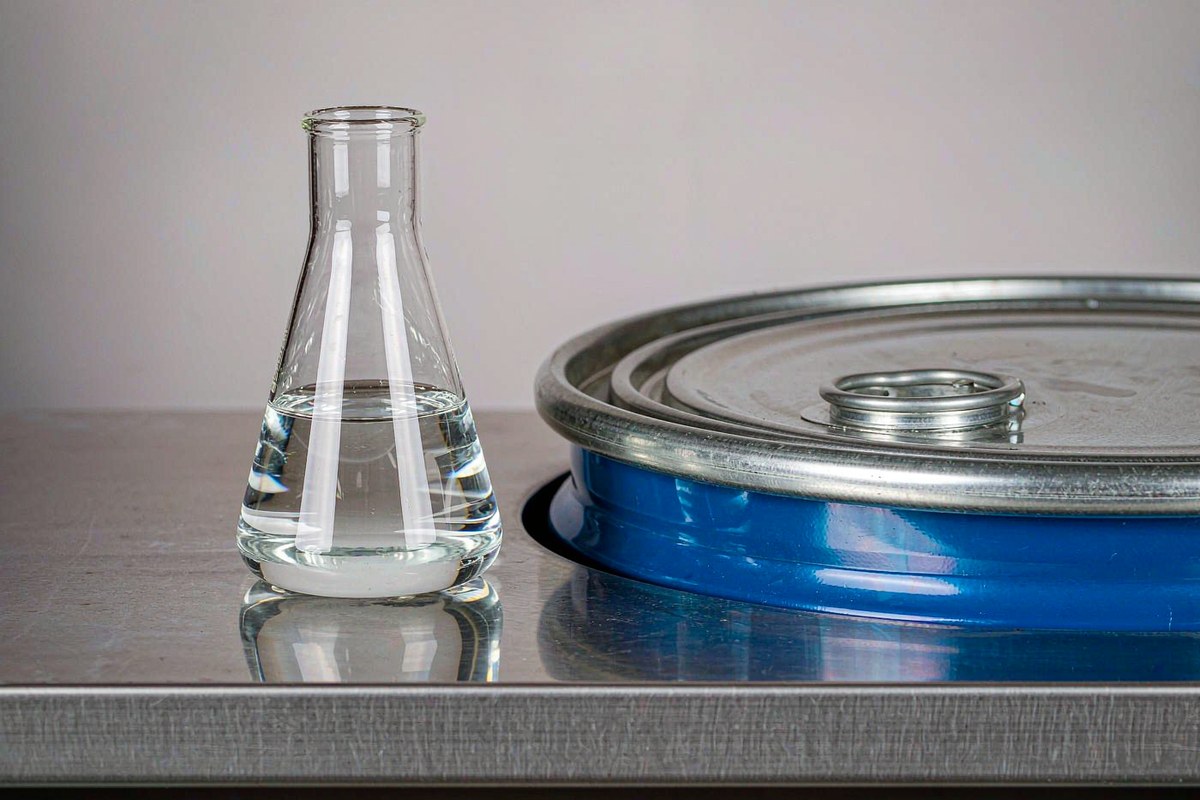
Product Code: MACM (3,3'-Dimethyl-4,4'-diaminodicyclohexylmethane)
CAS No.: 6864-37-5
Product Category: Epoxy Curing Agent (Functional Chemical)
Yolatech supplies MACM as a colorless viscous liquid with two primary amine groups on a saturated bicyclic backbone. Figures below come from the product page or the CAS record; anything the page does not publish is marked as such.
Item |
Information |
Product name |
MACM |
Chemical name |
3,3'-Dimethyl-4,4'-diaminodicyclohexylmethane |
CAS No. |
6864-37-5 |
Molecular weight |
238.41 g/mol (literature value for this CAS; not published on the product page) |
Active hydrogens |
4 (two primary amine groups, literature structure) |
Appearance |
Colorless viscous liquid |
Color, APHA |
Max. 30 |
Viscosity at 25 °C |
80-120 mPa·s |
AHEW |
60 g/eq |
Purity |
Min. 99.0% |
Melting point |
-7 °C (as published) |
Boiling point |
93-100 °C (as published; test pressure not stated) |
Flash point |
Above 230 °F (roughly 110 °C) |
Solubility |
Insoluble in water; soluble in benzene, ethanol and other organic solvents |
MACM curing agent carries two primary amine groups, so each molecule opens four epoxide rings. Divide the 238.41 g/mol molecular weight by those four active hydrogens and you get 59.6 g/eq, which is why the spec sheet rounds the AHEW to 60 g/eq. Worth repeating on any hardener before you trust a quoted number.
The backbone is fully saturated, so the rapid quinone-type yellowing route that aromatic diamines show under UV is not available to MACM. Colour stability in a finished clearcoat still depends on the resin, pigment, UV package and cure schedule.
Reaction speed is the trade-off: cycloaliphatic amines react more slowly at room temperature than straight-chain polyamines such as DETA, and formulators close that gap with an accelerator, with heat, or both.
MACM sits mid-range: 60 g/eq AHEW, 80-120 mPa·s, APHA 30 maximum. Four other diamines listed on this site bracket it from both sides, and the published data are not equally complete across the five pages.
Property (as published) |
MACM |
PACM |
DACH |
HTDA |
MXDA |
CAS No. |
6864-37-5 |
1761-71-3 |
694-83-7 |
13897-55-7 |
1477-55-0 |
Amine type |
Cycloaliphatic diamine |
Cycloaliphatic diamine |
Cycloaliphatic diamine |
Cycloaliphatic diamine |
Arylaliphatic diamine |
Appearance |
Colorless viscous liquid |
Colorless liquid |
Colorless to light yellow liquid |
Colorless to light yellow liquid |
Colorless liquid |
Viscosity at 25 °C, mPa·s |
80-120 |
50-80 |
Not published |
Not published |
Not published |
AHEW, g/eq |
60 |
Not published |
28.5 |
Not published |
Not published |
Amine value, mg KOH/g |
Not published |
Not published |
Min. 900 |
820-900 |
Not published |
Purity, % |
Min. 99.0 |
Min. 99.0 |
Min. 99.0 |
Min. 99.0 |
Min. 99.0 |
Water, % |
Not published |
Max. 0.20 |
Max. 0.30 |
Max. 0.10 |
Max. 0.50 |
Color limit |
APHA max. 30 |
APHA max. 30 |
APHA max. 30 |
Gardner max. 1.0 |
APHA max. 20 |
Three rows decide most enquiries. Water content is published for PACM, DACH, HTDA and MXDA but not for MACM, so ask for a limit on the COA if your incoming inspection needs one. Amine value appears only for DACH and HTDA; AHEW only for MACM and DACH.
If your binding constraint is |
Reach for |
Reason |
Lowest mix viscosity at equal stoichiometry |
DACH, AHEW 28.5 g/eq |
Roughly 15 phr against EEW 190, so less hardener goes in |
Published viscosity window for pump sizing |
MACM, 80-120 mPa·s |
PACM is thinner at 50-80 mPa·s but publishes no AHEW |
Tightest water specification on incoming goods |
HTDA, max. 0.10% |
MACM publishes no water figure at all |
Fastest ambient cure, aromatic backbone accepted |
MXDA |
Arylaliphatic amines cure faster than cycloaliphatic ones at 25 °C |
Flexible, long pot life, low exotherm |
Polyetheramine D-230 or YLH-6005 |
AHEW 95 g/eq on YLH-6005 stretches the working window |
Maximum toughness over chemical resistance |
YLH-5022 polyamide |
AHEW 165-185 g/eq, but viscosity runs 30000-80000 mPa·s at 25 °C |
Five specification lines is all the product page publishes: appearance, APHA colour, viscosity, AHEW and purity. Density, water content, amine value and gel time are not published; any of those has to come from the TDS or the COA.
Item |
Specification |
Status |
Appearance |
Colorless viscous liquid |
Published |
Color, APHA |
Max. 30 |
Published |
Viscosity, mPa·s at 25 °C |
80-120 |
Published |
AHEW, g/eq |
60 |
Published |
Purity, % |
Min. 99.0 |
Published |
Density, water content, gel time |
Not published |
Request on TDS / MSDS / COA |
Treat every number here as a specification to confirm against the TDS, MSDS and batch COA, not a performance guarantee. A few mPa·s of viscosity drift between batches is normal; AHEW drift moves your mix ratio directly.
Stoichiometric hardener loading follows one equation: phr = 100 × AHEW ÷ EEW. With MACM at 60 g/eq, the whole calculation turns on the epoxy equivalent weight of the resin you actually buy.
Resin |
Published EEW, g/eq |
MACM at 1:1, phr |
Hardener share of mix, wt% |
YLE-128 bisphenol A |
184-190 |
32-33 |
24.2-24.8 |
YLE-127 bisphenol A |
176-184 |
33-34 |
24.8-25.4 |
YLE-170 bisphenol F |
165-175 |
34-36 |
25.4-26.5 |
That number is not fixed. Production formulations usually run 0.9 to 1.1 equivalents of amine hydrogen: excess amine speeds surface cure and raises hardness, a deficit leaves a softer, more chemical-resistant film. Check with your supplier before you move outside 0.95-1.05.
One expectation needs correcting early: a 100 mPa·s hardener does not thin a formulation built on YLE-128 at 11000-15000 mPa·s. At 32 phr the hardener is about 24 wt% of the mix, so the blend stays resin-dominated. For sprayable viscosity, change the resin or add a reactive diluent from our reactive diluent range.
Amine hardeners fail in predictable ways, and MACM is no exception. What follows is shop-floor practice rather than published specification.
- Moisture and carbon dioxide are the usual suspects: an open drum left on a humid floor picks up both, and amine carbonate shows as blush or a greasy film on the cured surface. Close the cap immediately after use.
- Weigh the hardener, do not measure it by volume. A 5% shortfall on a 32 phr charge leaves roughly 0.95 equivalents instead of 1.00, and the film will stay soft.
- Mix until the streak test is clean. At 80-120 mPa·s against 11000-15000 mPa·s resin, the two phases do not blend by themselves, and unmixed hardener shows up as soft spots days later.
- Below roughly 15 °C, ambient cure with cycloaliphatic amines slows to the point of practical failure. Either heat the substrate and the components, or add an accelerator package and re-run your pot-life test.
- Pot life depends on mass and temperature, not a fixed number of minutes. A 100 g mix at 25 °C and a 20 kg drum at 35 °C are not comparable; measure both before you commit a shift.
- Full property development usually needs a heated post-cure. If your line cannot deliver that, do not write room-temperature-cured properties into the datasheet.
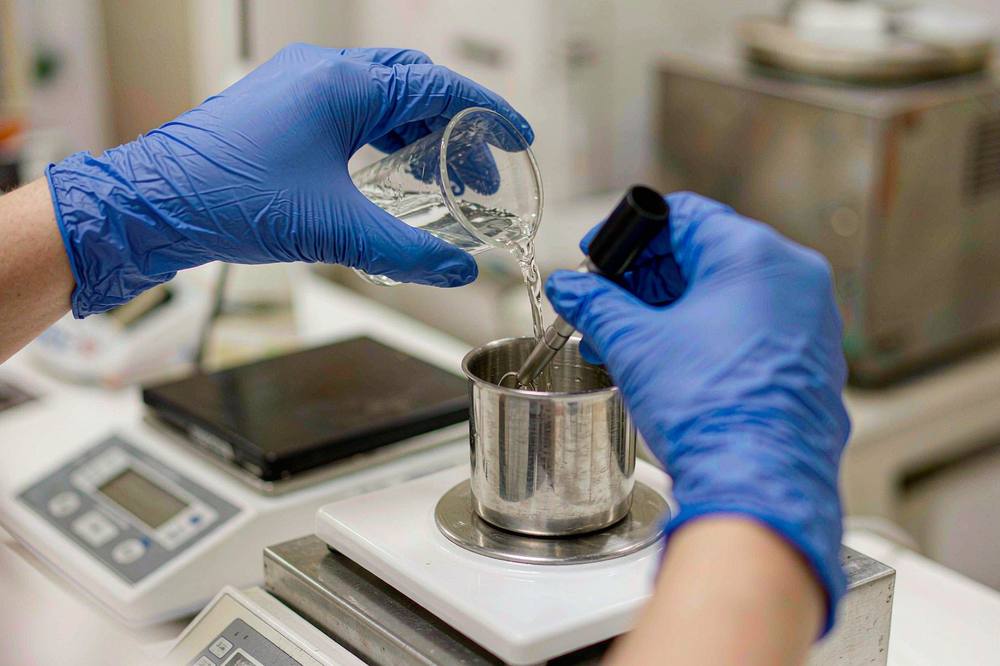
Six application areas are published for MACM, split between epoxy curing and non-epoxy synthesis. The epoxy side is where AHEW 60 and the saturated ring matter; the synthesis side only cares about purity and diamine structure.
Application |
Published examples |
What MACM contributes |
Watch out for |
Epoxy adhesives |
High-grade sanding adhesive, jewellery adhesive |
Water-clear bond line, low colour drift |
Thin bond lines cure slowly at 25 °C without an accelerator |
Epoxy coatings |
Marine paint, heavy-duty anticorrosive paint, industrial construction paint |
Chemical resistance with better UV colour hold than aromatic amines |
Amine blush if the drum has taken up moisture |
Composites |
Wind blade, wind mould material, rubber roller |
Low hardener viscosity helps wet-out before the resin is thickened |
Exotherm on thick sections; model the mass before you scale up |
PU and polyurea spray elastomers |
Amine chain extender and additive |
Sterically hindered diamine gives controllable reactivity |
Gel time is formulation-specific; no figure is published for MACM |
Transparent polyamide and polyimide synthesis |
Highly transparent nylon, polyimide, polyaspartic acid resin |
Cycloaliphatic diamine monomer |
Specify purity min. 99.0% and APHA max. 30 on the order |
Isocyanate synthesis |
Raw material |
Diamine feedstock |
Water content is not published; agree a limit with us first |
Coatings formulators usually arrive here from the epoxy resin coatings page, adhesive formulators from epoxy resin adhesives, laminators from epoxy resin composites. The same hardener behaves differently in each, because the binding constraint changes: colour in one, exotherm in another.
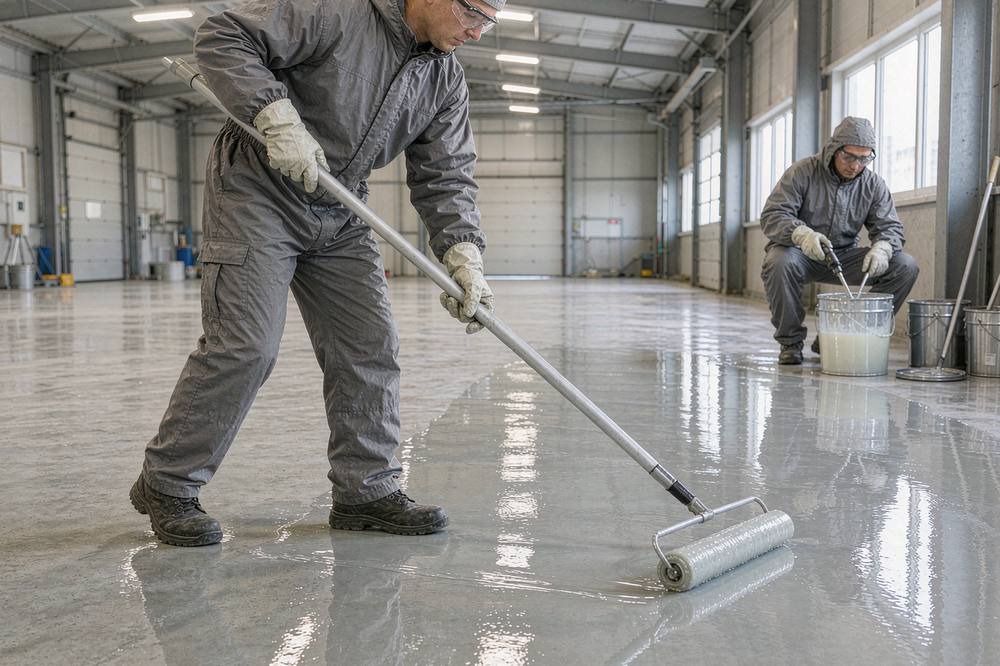
AHEW is 60 g/eq as published. Divide 100 × 60 by the EEW of your resin: 31.6 phr against a 190 g/eq bisphenol A grade, 35.3 phr against 170 g/eq bisphenol F. Round to one decimal on the batch sheet.
Both names point at CAS 6864-37-5, and both Yolatech pages publish AHEW 60 g/eq with purity min. 99.0%. The MACM page adds a viscosity of 80-120 mPa·s at 25 °C; the DMDC listing calls it a transparent liquid with no viscosity figure. Ask which grade is actually offered before you accept a quotation.
It does, but slowly relative to aliphatic polyamines such as diethylenetriamine DETA. In practice, ambient-cured MACM systems are accelerated or given a heated post-cure, and the schedule should be verified on your own line rather than copied from a datasheet.
Very little, and this is the most common wrong expectation. At 32 phr into a resin of 11000-15000 mPa·s, the blend stays resin-dominated. Lower the viscosity with a resin such as bisphenol F epoxy resin YLE-170 or with a reactive diluent instead.
Three lines cover it: purity min. 99.0%, colour APHA max. 30, viscosity 80-120 mPa·s at 25 °C. If your process is water-sensitive, add a water limit as a fourth line, because the product page does not publish one. Every value should be confirmed on the COA of the shipped batch.
Choose an anhydride such as MHHPA when you need long pot life and high heat distortion with a heated cure. Choose a polyamide such as YLH-5022 when toughness and adhesion to damp concrete matter more than chemical resistance. MACM is not the right pick for either of those priorities.
Drum packaging is standard, with a shelf life of at least 12 months from the date of manufacture in the original packing at ambient temperature. Store it in a well-ventilated area, away from flames and direct sunlight, and close the cap tightly immediately after each use.
Amines are corrosive and can act as skin sensitisers. PPE, ventilation, spill procedure and first aid are set out in the MSDS, and that document governs your shop floor. Read it before the first drum is opened.
Regulatory status deserves one caveat: REACH registration and RoHS conformity for your destination market must be confirmed on the current SDS and supplier declaration before you order, and nothing here should be read as a certification. Ask for written evidence with the batch if an audit needs it.
Full specifications, samples and current lead times are on the MACM product page. Related amine hardeners worth comparing include 1,2-diaminocyclohexane DACH, 4,4'-diaminodicyclohexylmethane PACM, methylcyclohexanediamine HTDA, 1,3-cyclohexanebis(methylamine) 1,3-BAC, m-xylylenediamine MXDA, polyetheramine D-230 and modified amine YLH-6005. Resin pairing starts with bisphenol A epoxy resin grades; electrical work is covered under electrical and electronic applications.



 Red IPv6 compatible