
Tetrafunctional epoxy resin YLSE-721 is a four-epoxy-group aniline epoxy sold in three versions with EEW 105-125 g/eq. Chemically it is 4,4'-methylenebis(N,N-diglycidylaniline); its rigid core pushes crosslink density and heat resistance past bisphenol A resins. Grade data, dosage and limits follow.
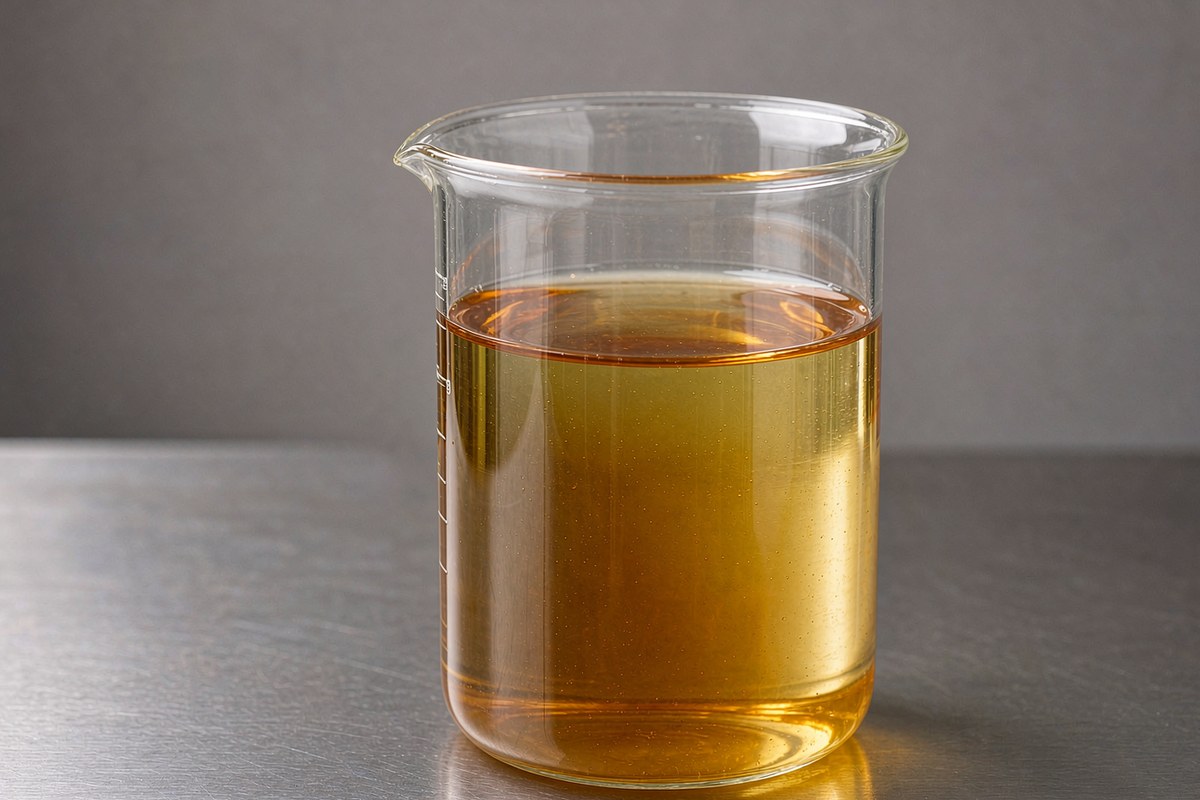
Figure 1. YLSE-721 ships as a yellow viscous liquid; the three grades share one appearance specification.
Filament winding and high-temperature adhesive work both punish difunctional resins. Bisphenol A diglycidyl ether networks soften well before 150 °C, so formulators needing mechanical properties near 200 °C move to multifunctional aniline epoxies. Tetrafunctional epoxy resin YLSE-721 is the Yolatech grade for that job: the product page names filament-wound composites, long pot life at process temperature and high Tg.
This report compiles what the YLSE-721 product page publishes, separates it from calculated values, and works through grade selection, dosage and field limits. Numbers stop where the page stops. Nothing here replaces the current TDS.
Table 1 collects identity data. Molecular weight and the theoretical equivalent are calculated from the chemical name; the CAS number comes from third-party databases because the page does not list it.
Table 1. Identity of 4,4'-methylenebis(N,N-diglycidylaniline) YLSE-721.
Item |
Information |
Chemical name |
4,4'-methylenebis(N,N-diglycidylaniline) |
CAS No. |
Not published on the product page; 28768-32-3 per third-party databases, confirm on the COA |
Molecular formula / MW |
C25H30N2O4 / 422.52 g/mol, calculated from the chemical name |
Functionality |
4 epoxy groups (stated on the page: tetrafunctional) |
Theoretical EEW |
105.6 g/eq, calculated (422.52 / 4); published window 105-120 g/eq for YLSE-721 |
Table 2 reproduces the published grade table; the versions share one chemistry and differ in viscosity, price and purity positioning.
Table 2. Published specification of the three YLSE-721 grades.
Item |
YLSE-721L |
YLSE-721C |
YLSE-721 |
Appearance |
Yellow liquid |
Yellow liquid |
Yellow liquid |
Color, Gardner |
10 or below |
10 or below |
10 or below |
Viscosity, cps (see 7.1) |
6000-11000 (25 °C) |
3000-7000 |
3000-7000 |
EEW, g/eq |
110-125 |
110-125 |
105-120 |
Volatiles, % |
0.6 or below |
0.6 or below |
0.6 or below |
Positioning |
Lower viscosity |
Lower price |
High purity |
Three data classes are kept apart. Published values come from the product page. Calculated values, such as the 105.6 g/eq theoretical equivalent, follow from arithmetic on published facts. Third-party values, such as CAS 28768-32-3, carry their own attribution and are not treated as supplier data. In release testing the epoxy equivalent is normally determined by titration according to ASTM D1652 or ISO 3001, and Gardner color is measured according to ASTM D1544; the page does not state its internal methods, so the inspection plan in 7.2 fixes them instead.
Four epoxy groups per 422.52 g/mol molecule set the ceiling on crosslink density. A fully reacted YLSE-721 network carries roughly twice the junction density of a difunctional resin of similar equivalent weight, the structural reason behind the high Tg and hot mechanical retention.
Two secondary effects matter in practice. Tertiary aniline nitrogens left after glycidylation catalyze their own cure, which supports the long pot life the page describes; the same activity means accelerator dosing must be trimmed, not added blindly. The aromatic backbone resists chain scission, backing the radiation and chemical resistance claims. Pot life is not a free gift: when the winding bath sits warm for hours, viscosity still drifts, and bath turnover discipline decides the day's consistency.
Table 3 sets YLSE-721 against the two closest alternatives in the portfolio: trifunctional aminophenol YLSE-0500 and liquid tetrafunctional YLD-1240. All values are published, viscosity at 25 °C where stated.
Table 3. Property comparison of YLSE-721 with alternative multifunctional systems.
Attribute |
YLSE-721 (this product) |
YLSE-0510 (alternative) |
YLD-1240 (alternative) |
Functionality |
4 (tetrafunctional) |
3 (trifunctional) |
4 (tetrafunctional) |
EEW, g/eq |
105-120 |
93-106 |
95-110 |
Viscosity, cps at 25 °C |
3000-7000 (721/721C) |
400-900 |
1600-3000 |
Trade-off |
Highest Tg potential, stiff processing |
Easiest flow, lower crosslink density |
Lowest viscosity among the tetrafunctional grades |
Best fit |
Filament-wound hot-service vessels |
Fast wet-out laminating |
Casting where heat resistance meets flow |
The hierarchy is strict. If the part must hold stiffness near 200 °C, the tetrafunctional aniline core wins, and the viscosity price is paid through heated lines or a diluent such as YLD-6008 hexanediol diglycidyl ether. If wet-out speed dominates and service temperature stays moderate, the low-viscosity trifunctional N,N-diglycidyl-4-glycidyloxyaniline YLSE-0500 series fits better. The liquid tetrafunctional grade YLD-1240 sits between them, while YLSE-0600 aniline epoxy resincovers cases needing a pendant glycidyl ether for flexibility.
Dosage follows the standard equivalent relationship: phr = 100 × AHEW ÷ EEW, with AHEW the amine hydrogen equivalent weight of the curative and EEW the epoxy equivalent of the resin. Table 4 evaluates both ends of the published YLSE-721 window, 105 and 120 g/eq, with curatives documented on the Yolatech site. The anhydride row applies the 0.85 empirical factor.
Table 4. Calculated curative demand for YLSE-721 at the published EEW limits.
Curative |
AHEW, g/eq |
phr at EEW 105 |
phr at EEW 120 |
52.6 (calculated) |
50.1 |
43.8 |
|
MHHPA liquid anhydride, factor 0.85 |
168.19 (calculated) |
136.1 |
119.1 |
YLH-9101 modified amine |
92 |
87.6 |
76.7 |
YLH-3002 modified amine |
182 |
173.3 |
151.7 |
Dosage matters. Treat every number in Table 4 as a calculated starting point, not a specification. Aerospace practice cures aniline tetrafunctional resins with aromatic amines, outside the current Yolatech portfolio; those systems typically run a staged schedule with a postcure well above 150 °C to reach the promised Tg. When a first trial is mixed, gel time and a DSC scan on the actual curative lot decide the schedule; accelerator level swings gel time by hours. The theoretical equivalent, 105.6 g/eq, sits inside the published window, a useful cross-check that the grade is close to neat monomer.
Handling a 3000-11000 cps aniline resin is mostly heat management and bath hygiene.
- Warm the resin gently before metering; even 40-50 °C cuts batching time sharply.
- Degas after adding curative; entrained air in a filament-wound wall becomes a void path.
- Keep bath temperature steady during winding; pot life still degrades once the batch is catalyzed.
- Dilution with a mono- or difunctional ether lowers viscosity but trades away Tg; weigh that before adding much.
- Postcure above 150 °C where the part geometry allows; undercured aniline networks look done and creep in service.
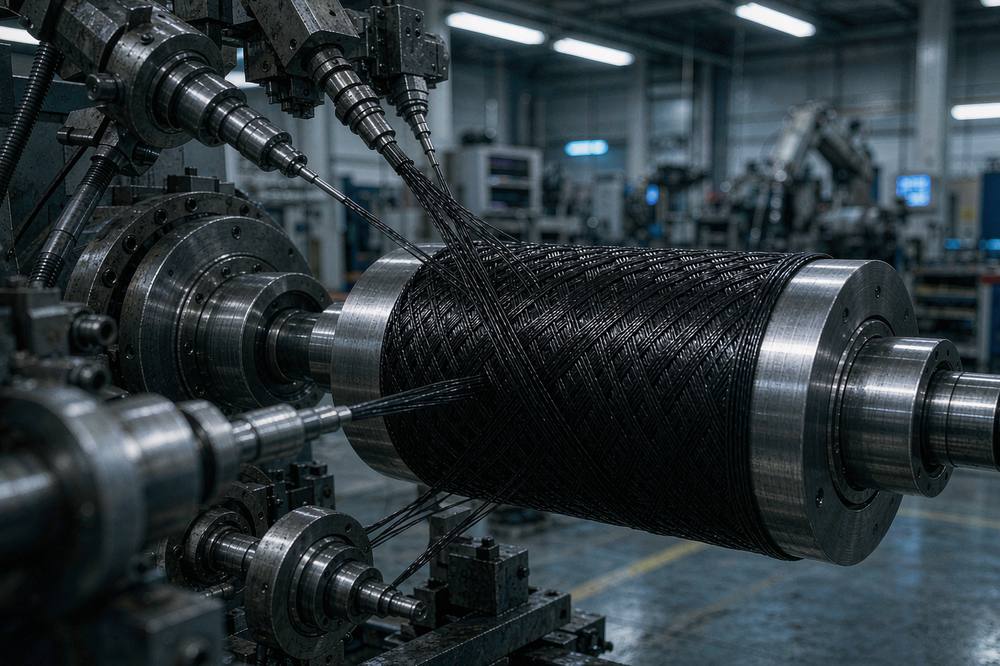
Figure 2. Filament winding, the first process the page names for YLSE-721; bath viscosity stability and degassing decide quality.
The page names two application fields: carbon and glass fiber composites, and structural adhesive for 200-260 °C service. Table 5 lists each with the resin's role.
Table 5. Published application fields and the role of YLSE-721 in each.
Application |
Role of YLSE-721 |
Process note |
Carbon fiber composites |
Matrix resin for high-temperature parts |
Filament winding or prepreg route |
Glass fiber composites |
Matrix resin where cost is tighter |
721C positioning favors volume |
Structural adhesive, 200-260 °C |
Heat-resistant adhesive base |
Joint design must share the thermal load |
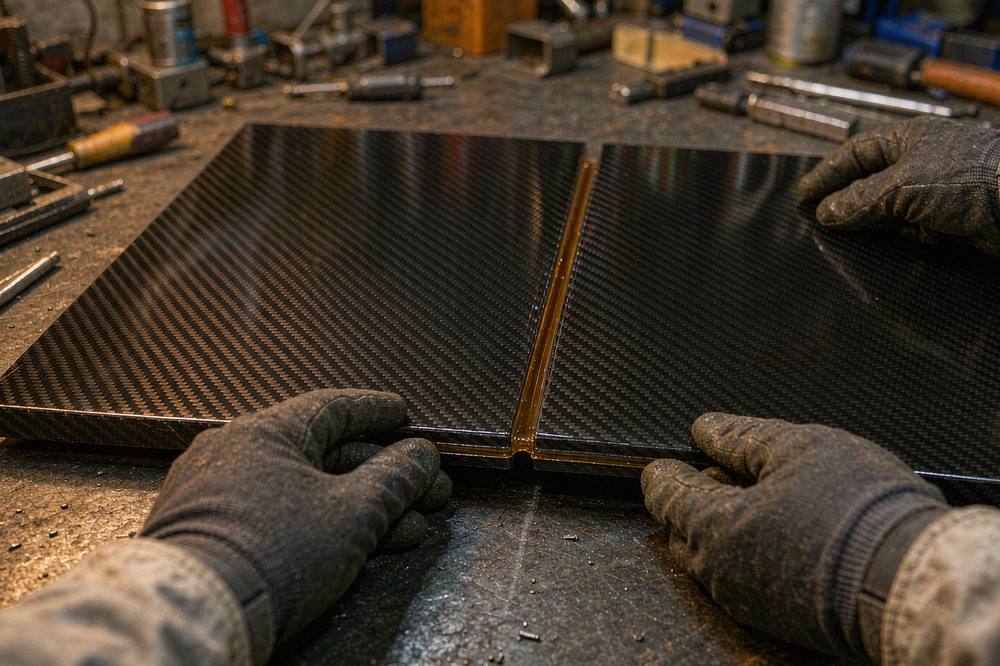
Figure 3. In the 200-260 °C structural adhesive field, the aniline network holds the bondline; bisphenol A systems creep.
Three published facts deserve a caution flag. First, the viscosity row of the grade table carries the header "cps at 50 °C", yet the YLSE-721L cell is annotated "25 °C", and the L grade is labeled "Lower viscosity" while showing 6000-11000 against 3000-7000 for the other two. Those numbers cannot share one basis, so confirm the temperature in the current TDS before comparing quotes. Second, the page publishes no CAS, density, flash point or Tg; CAS 28768-32-3 comes from third-party databases and should be verified on the COA before customs or compliance work. Third, color stops at Gardner 10 or below and the liquid is yellow, so clear or decorative parts are not a fit.
The page also lists "fast curing speed at room temperature" while describing long pot life at process temperatures. Those statements pull against each other, as they do across multifunctional aniline systems; in practice the cure schedule depends on the curative and accelerator package, not on the resin alone. If a room-temperature schedule without postcure is a hard requirement, this is not the right resin family.
A four-line incoming check catches most lot problems: EEW by titration according to ASTM D1652 or ISO 3001, viscosity by the method stated in the TDS, color according to ASTM D1544, and volatiles on a fresh sample in duplicate. Storage follows the page: a well-ventilated area away from flames and sunlight, cap closed immediately after use, at least 12 months in the original packing at ambient temperature. Part-used drums deserve a nitrogen blanket; the epoxy groups are moisture-sensitive over long standing. All safety information is provided in the Material Safety Data Sheet, the governing document for handling and transport; check it before shipping, since the flash point is unpublished.
One chemistry, three positionings. YLSE-721 carries the tightest EEW window at 105-120 g/eq and the high-purity label, YLSE-721C is priced for volume at EEW 110-125 g/eq, and YLSE-721L is the lower-viscosity version at 6000-11000 cps (25 °C) and EEW 110-125 g/eq. Verify the viscosity basis with the supplier first, per 7.1.
Equivalent-weight arithmetic makes any polyfunctional amine or anhydride usable; Table 4 works the numbers for PACM, MHHPA, YLH-9101 and YLH-3002. For maximum service temperature, anhydride or aromatic amine systems with a staged postcure are standard; aliphatic amines cure faster but cap heat performance.
The column header reads 50 °C, but the YLSE-721L cell is annotated 25 °C. Epoxy viscosity falls steeply with temperature, so the two bases differ by a factor of several. Confirm the basis per grade; never quote a mixed comparison to a customer.
No, and the substitution fails in both directions. YLE-128 flows at 11000-15000 mPa·s with EEW 184-190 g/eq and cures into a network that softens far below what YLSE-721 delivers; conversely, YLSE-721 costs more, processes stiffer, and its aniline network is wasted on ambient service parts. Choose by service temperature, not by habit.
The Table 4 value is 136.1 phr at EEW 105 g/eq and 119.1 phr at EEW 120 g/eq, calculated with the 0.85 anhydride factor. Start near 120-135 phr with the usual 0.5-2 phr tertiary amine accelerator, run a gel time check, then adjust against DSC data.
Follow the page: close the cap tightly after use, keep the drum in a ventilated area away from flames and sunlight, and use the contents within 12 months of manufacture. For a drum standing open for weeks, blanket it with dry nitrogen to limit moisture uptake and viscosity drift.
Tetrafunctional epoxy resin YLSE-721 gives formulators a documented route to high-crosslink, heat-resistant networks. Three grades cover EEW 105-125 g/eq, the calculated theoretical equivalent of 105.6 g/eq matches that window, and the published application fields are filament-wound composites and 200-260 °C structural adhesive. The open items are equally concrete: the grade table's viscosity basis needs TDS confirmation, CAS and physical constants are unpublished, and cure schedules must be validated per curative lot. Grade choice reduces to a single question: which constraint binds first, flow, price or purity.
1. Yolatech product page: 4,4'-Methylenebis(N,N-diglycidylaniline) YLSE-721/721C/721L, https://www.yolatech.com/44-methylenebisnn-diglycidylaniline-ylse-721721c721l (accessed 2026-10-26).
2. Yolatech product page: N,N-diglycidyl-4-glycidyloxyaniline YLSE-0500/0510/0510L, https://www.yolatech.com/44-methylenebisnn-diglycidylaniline (accessed 2026-10-26).
3. Yolatech product page: YLD-1240, https://www.yolatech.com/curing-agent-ylh-102g4 (accessed 2026-10-26).
4. Yolatech Technical Data Sheet, Material Safety Data Sheet and Certificate of Analysis for YLSE-721, YLSE-721C and YLSE-721L (available on request).
5. ASTM D1652, test method for epoxy content of epoxy resins.
6. ISO 3001, determination of epoxy equivalent.
7. ASTM D1544, Gardner color of transparent liquids.



 Red IPv6 compatible