
YLSE-186 epoxy resin is a trifunctional alicyclic epoxy resin, CAS 25293-64-5, that carries one cycloaliphatic epoxide and two glycidyl ester groups on a ring. Its published EEW is 100-111 g/eq at 2000-4000 cps, close to a quarter of liquid bisphenol A viscosity, so it wets fibres without a diluent.
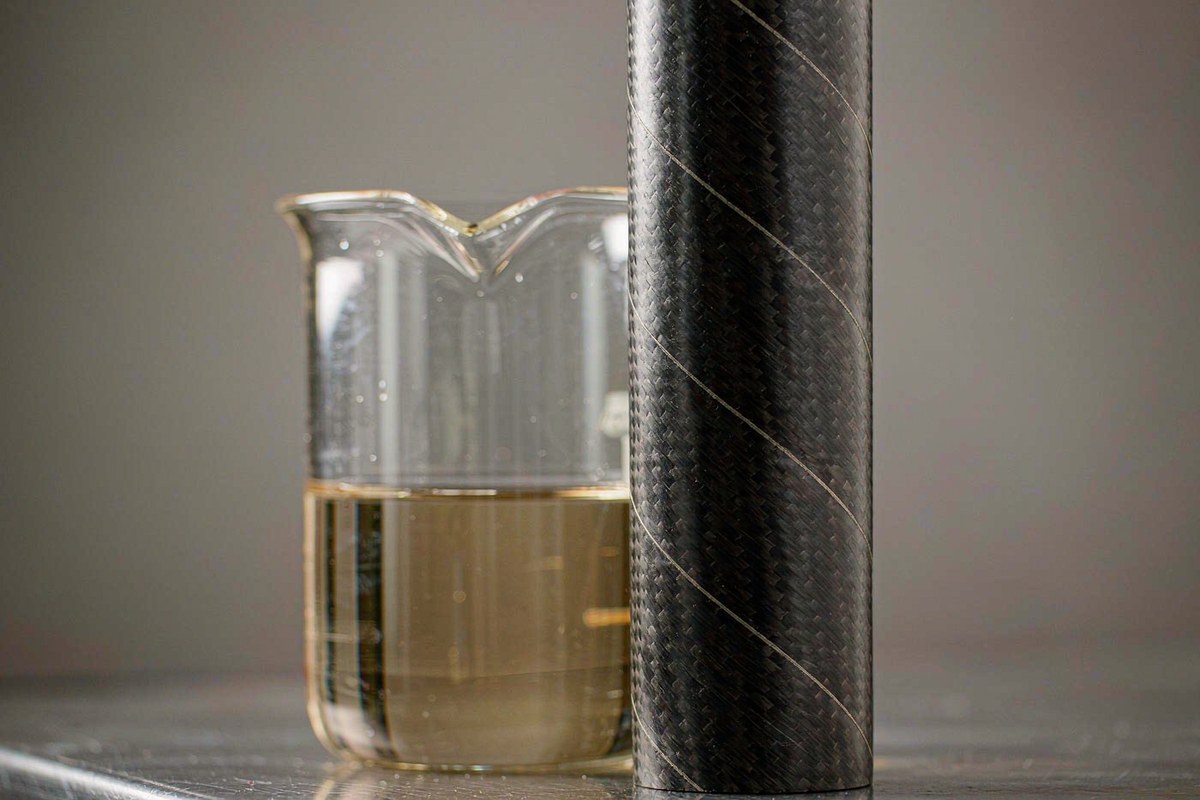
Figure 1. YLSE-186 epoxy resin as supplied: a pale straw liquid.
Product Code: YLSE-186 / YLSE-186C
Chemical Name: 4,5-Epoxytetrahydrophthalic acid diglycidylester
CAS No.: 25293-64-5
Product Category: Trifunctional alicyclic epoxy resin
Solvent-free composite work sets two demands against each other. A resin must wet a dry fibre tow easily, yet cure into a stiff matrix. YLSE-186 epoxy resin (CAS 25293-64-5) sits in that gap.
All data below come from the public product page for 4,5-epoxytetrahydrophthalic acid diglycidylester. Where the page is silent, figures are marked literature or calculated, and every dosage number can be recomputed.
YLSE-186 ships as a clear to pale yellow liquid in drums, in two commercial grades. Only six parameters are published, so the tables separate measured values from structural inference.
Table 1 lists the identification data used in this paper, and Table 2 the published specification for both grades. Nothing outside those items is a quality claim.
Table 1. Identification data of YLSE-186 epoxy resin (CAS 25293-64-5).
Item |
Information |
Product Code |
YLSE-186 (high purity) and YLSE-186C (economy grade) |
Chemical Name |
4,5-Epoxytetrahydrophthalic acid diglycidylester |
CAS No. |
25293-64-5 |
Epoxy groups per molecule |
3: one alicyclic epoxide plus two glycidyl ester groups |
Appearance |
Colorless to light yellow liquid, light yellow for YLSE-186C |
Table 2. Published specification of the two YLSE-186 grades.
Item |
YLSE-186C |
YLSE-186 |
Appearance |
Light yellow liquid |
Colorless to light yellow liquid |
Color, Gardner |
Max. 2 |
Max. 2 |
Viscosity, cps at 25 °C |
3000-6000 |
2000-4000 |
Epoxy equivalent weight, g/eq |
100-125 |
100-111 |
Volatiles, % |
Max. 1 |
Max. 1 |
Positioning |
Lower price |
High purity |
Values marked published come from the YLSE-186 product page. Epoxy equivalent weight is determined by titration according to ASTM D1652 or ISO 3001, viscosity is measured at 25 °C, and color according to ASTM D1544. Molecular mass and theoretical EEW are calculated from the structure (Table 3).
Table 3. Constants calculated from the YLSE-186 structure.
Property |
Value |
Basis |
Molecular formula |
C14H18O7 |
Structure |
Molar mass |
About 298 g/mol |
From formula |
Theoretical EEW |
About 99 g/eq |
298 ÷ 3 |
Epoxy equivalents per tonne |
About 10,100 eq |
At EEW 99 |
One alicyclic epoxide and two glycidyl ester groups sit on the same cyclohexane ring, and the three sites do not react at the same rate.
The glycidyl ester groups open faster than the alicyclic ring, and the published description states that reactivity exceeds general alicyclic epoxy resin. Anhydride systems show the split first: ester groups react early, the ring follows at higher temperature. Three sites on one small molecule also give a denser network than a difunctional ester.
The theoretical EEW of about 99 g/eq in Table 3 sits just below the published window of 100-111 g/eq, consistent with a small hydrolysis and volatile fraction. Capacity per tonne decides mix economics: at EEW 100 the resin carries about 10,000 equivalents against 5,300 for a bisphenol A resin at EEW 184-190.
Table 4 compares YLSE-186 epoxy resin with the grades most often quoted against it. Three families compete for this work: difunctional cycloaliphatic esters, trifunctional glycidylamines, and bisphenol A liquids.
Table 4. YLSE-186 against alternative epoxy systems, at published values.
Property |
YLSE-186, this grade |
Alternative grades, published data |
Epoxy groups per molecule |
3: one alicyclic epoxide, two glycidyl ester groups |
YLCE-2021 cycloaliphatic epoxy resin: 2. YLSE-0600 trifunctional glycidylamine resin: 3. YLSE-721 tetrafunctional epoxy resin: 4 |
EEW, g/eq |
100-111; 100-125 for YLSE-186C |
YLCE-2021: 126-132. YLSE-0600: 102-110. YLSE-721: 105-120. Liquid bisphenol A epoxy resin YLE-128: 184-190 |
Viscosity at 25 °C |
2000-4000 cps; 3000-6000 cps for YLSE-186C |
YLCE-2021: 220-250 mPa·s. YLSE-0600: 7000-20000 cps. YLSE-721: 3000-7000 cps at 50 °C. YLE-128: 11000-15000 mPa·s |
Typical role |
Solvent-free composite matrix, adhesive base |
YLCE-2021: thin impregnation. YLSE-0600, YLSE-721: high-crosslink laminating. YLE-128: general purpose. YLEP-638 novolac epoxy resin: hot chemical resistance |
Read the viscosity column first. YLCE-2021 flows at 220-250 mPa·s, an order of magnitude thinner than YLSE-186, but with only two epoxy groups.
Hardener cost is the trade-off buyers miss. Doubling the epoxy equivalents per tonne roughly doubles the amine bought, so a cheap high-functionality grade can lose on mix cost. Price the mix, not the drum.
Amine-cured mixes follow phr = 100 × AHEW ÷ EEW. With YLSE-186 in the 100-111 g/eq window, a hardener of AHEW 96 g/eq is needed at roughly 90 phr, close to double the 50 phr the same hardener asks against a bisphenol A liquid.
Table 5. Theoretical hardener demand for an amine of AHEW 96 g/eq.
Resin grade, published EEW |
EEW, g/eq |
Theoretical hardener, phr |
YLSE-186 |
100-111 |
96.0-86.5 |
YLSE-186C |
100-125 |
96.0-76.8 |
Liquid bisphenol A resin YLE-127 |
176-184 |
54.5-52.2 |
Liquid bisphenol A resin YLE-128 |
184-190 |
52.2-50.5 |
The formula is worth checking against published hardener data: YLH-6004 modified amine hardener lists AHEW 96 g/eq and an added weight of 50 phr against a resin of EEW 190, and 100 × 96 ÷ 190 = 50.5.
The trap is that 50 phr line. At 50 phr against YLSE-186 you are near half the stoichiometric hardener, so the skin sets hard while the core stays soft. Recalculate from the batch EEW, then confirm with a gel-time check.
Anhydride stoichiometry uses a different number: phr = 100 × anhydride equivalent weight ÷ EEW. For a mono-anhydride such as MHHPA anhydride hardener the equivalent weight is about 168 g/eq (calculated), so full stoichiometry at EEW 100 is 168 phr, and most shops run 85-90% of that near 143-151 phr.
Viscosity gives one more lever. If 2000 cps is too thick for the mould, blend rather than heat: a glycidyl ester diluent such as YLD-9012 glycidyl ester diluent at 600-1200 mPa·s thins the mix and stays reactive.
Three epoxy groups per molecule release more heat per kilogram than a difunctional resin, and the low viscosity moves that heat faster. Exotherm is the first variable to control.
• Keep trial mixes near 100 g in a wide container. The same mix in a full pail can gel in a fraction of the time.
• Store sealed below 4 °C, and let a cold drum reach room temperature before opening. Condensation goes straight into the resin.
• Work in dry air. Alicyclic epoxides hydrolyse slowly, and a humid shop shows up later as a drifting EEW rather than an obvious defect.
• De-gas the mixed resin before cure. At 2000-4000 cps it still traps air, and voids in a wound part are expensive to fix.
• Wear nitrile gloves, goggles and a coverall. Epoxy resins are skin sensitisers, and the MSDS carries the PPE list.

Figure 2. Wet-out of carbon fibre tow in a YLSE-186 resin bath.
The product page names two application directions: carbon fibre composites such as high-pressure gas bottles and motor rotors, and high-temperature adhesives. Table 6 sets out what each asks of the resin.
Table 6. Application areas for YLSE-186 and the constraint in each.
Application |
What YLSE-186 contributes |
Where the constraint sits |
Filament-wound pressure vessels |
Thin bath for fibre wet-out, more crosslink density per tonne |
Warm or oven cure; voids if the bath is not de-gassed |
Motor rotors and rotating parts |
Stiff matrix with strong fibre binding at a manageable mass |
Exotherm has to be controlled on thick sections |
High-temperature adhesives |
Three reactive sites and a low-viscosity base that accepts fillers |
Color is loose on YLSE-186C, so use the base grade for visible bond lines |
Two application lines on a product page are a starting point, not a scope limit. If the part runs through an anhydride bath and needs a stiff matrix, this grade fits; for a cheap filled casting it does not.
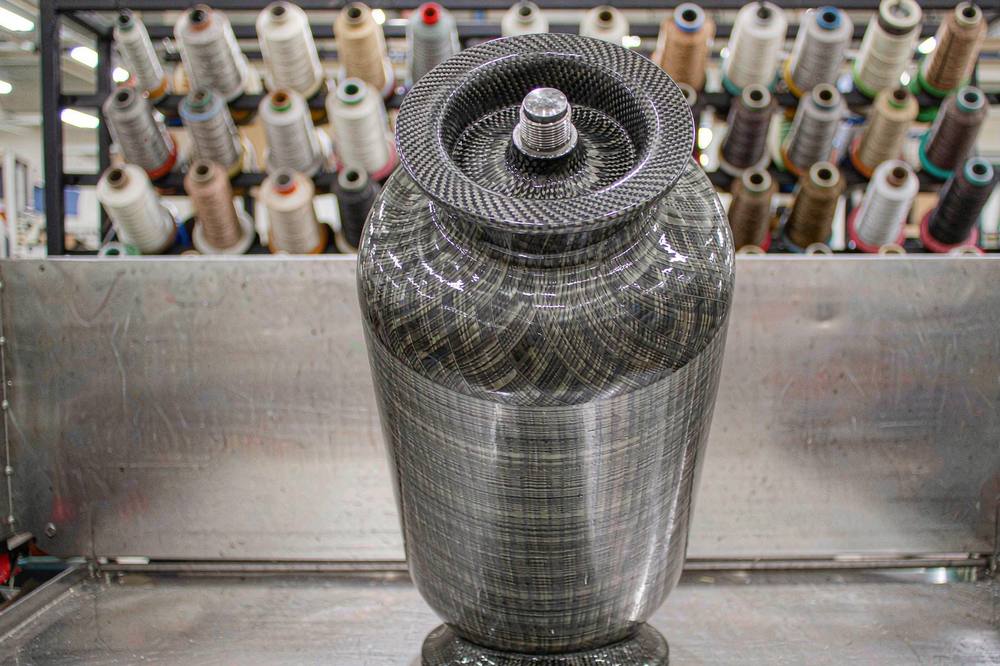
Figure 3. Filament-wound pressure vessel wound with YLSE-186 epoxy resin.
Two areas limit how YLSE-186 epoxy resin can be specified: the published data set, and the storage behaviour of an alicyclic epoxide.
The specification covers appearance, color, viscosity, EEW, volatiles and positioning only. Density, flash point, chlorine content, gel time and a titration epoxy value are not on the page, so any dosage plan stays theoretical until a batch COA confirms it, and large neat castings sit outside the grade.
Drum-to-drum variation exists on any epoxy line, so incoming checks on viscosity, EEW and volatiles are recommended for every lot. Water content is determined by Karl Fischer titration where a lot is disputed, and color is measured according to ASTM D1544.
Supply is by drum package, and the page carries two storage statements that do not agree: sealed storage below 4 °C with a shelf life of about six months, and 24 months in original packing.
Two numbers that far apart usually describe different conditions, so take the shorter one. Alicyclic epoxides hydrolyse slowly in warm, damp storage: keep drums sealed, use opened drums first, and take hazard information from the Material Safety Data Sheet.
YLSE-186 is published at 100-111 g/eq and YLSE-186C at 100-125 g/eq. The structure gives a theoretical 99 g/eq, so the window fits a three-functional molecule. Verify the batch value by titration before fixing a ratio.
For an amine hardener, phr = 100 × AHEW ÷ EEW. A hardener of AHEW 96 g/eq such as YLH-6004 needs 96.0 phr at EEW 100 and 86.5 phr at EEW 111. Filler load and temperature move the ratio.
It can, but slowly. The published description allows amines as a cure route, and the two glycidyl ester groups are the reactive part. Cycloaliphatic epoxies cure slowly with amines in general, so a 15-20 °C workshop cure needs time or a warm post-cure.
Both are the same molecule at the same color ceiling, and the page separates them on price and purity. YLSE-186C has a wider EEW window of 100-125 g/eq and a light yellow tone; YLSE-186 is the high-purity grade at 100-111 g/eq.
Not as a straight swap. YLCE-2021 carries two epoxy groups at EEW 126-132 g/eq and flows at 220-250 mPa·s, so a substitution changes the hardener ratio and the bath viscosity. YLSE-186 raises crosslink density and roughly doubles the amine charge.
The page instructs storage below 4 °C with a sealed shelf life of half a year, and also repeats the standard line of 24 months in original packing. Plan around the shorter figure: cold storage slows the hydrolysis and color drift of alicyclic epoxides.
This trifunctional alicyclic epoxy (CAS 25293-64-5) pairs a published EEW of 100-111 g/eq with a viscosity of 2000-4000 cps, so it wets fibre without a diluent and still cures to a high crosslink density.
Its practical roles are a solvent-free composite matrix and a base for high-temperature adhesives. Its limits are the thin published data set, a hardener demand near 90 phr with an amine, and a cold, sealed storage requirement.
Numbers above are published values or figures marked calculated and literature, and the current TDS / MSDS / COA governs the specification. Grade availability for YLSE-186 epoxy resin is confirmed against a target EEW.
• Yolatech product page, 4,5-Epoxytetrahydrophthalic acid diglycidylester YLSE-186: https://www.yolatech.com/45-epoxytetrahydrophthalic-acid-diglycidylester-ylse-186-cas-25293-64-5 (accessed 2026-10-09).
• Yolatech Technical Data Sheet, Material Safety Data Sheet and Certificate of Analysis for YLSE-186, CAS 25293-64-5 (available on request).
• ASTM D1652, epoxy content of epoxy resins (EEW).
• ISO 3001, determination of epoxy equivalent.
• ASTM D445, kinematic viscosity.
• ASTM D1544, Gardner color of transparent liquids.



 Red IPv6 compatible