DOPO Modified Phenolic Epoxy Resin: Halogen-Free Flame Retardant Grades for Copper-Clad Laminates
Sep 30, 2026
DOPO modified phenolic epoxy resin is a halogen-free reactive flame-retardant resin in which the DOPO unit is chemically bonded into the epoxy backbone. Yolatech now supplies five solution grades with EEW 280-390 g/eq and 70-75% solids for halogen-free copper clad laminates and electrical laminates.
Product Code: YLDP series — YLDP-315-M75 / YLDP-300-K70 / YLDP-310-EK75 / YLDP-300-K75 / YLDP-60-K75Key Raw Material CAS No.: 35948-25-5 (DOPO)Product Category: DOPO Modified Phenolic Epoxy Resin / Halogen-Free Reactive Flame Retardant Epoxy Resin
1. Product Information
Item
Information
Chemical Description
Phenolic epoxy resin modified with DOPO (9,10-dihydro-9-oxa-10-phosphaphenanthrene-10-oxide), reacted through the DOPO P-H bond onto the epoxy chain
Supplied Grades
YLDP-315-M75, YLDP-300-K70, YLDP-310-EK75, YLDP-300-K75, YLDP-60-K75
Key Raw Material CAS No.
35948-25-5 (DOPO)
DOPO Molecular Formula
C12H9O2P (phosphorus content of the DOPO molecule: approx. 14.3%)
Supplied Form
Solution-type resin, non-volatile content 70–75±1%, viscosity up to 3000 mPa·s depending on grade
Flame Retardant Type
Reactive phosphorus-based, halogen-free
Family Position
One of three DOPO modified phenolic epoxy types from Yolatech, alongside DOPO-HQ modified and DOPO-NQ modified grades
Category
Halogen-free flame retardant epoxy resin for printed circuit substrates, copper-clad laminates and electrical laminates
2. Product Description
DOPO is a rigid cyclic phosphinate whose single P-H bond is what makes it versatile: it adds readily across epoxy groups, double bonds, carbonyls, halogenated sites and amino groups, which is why DOPO has become the standard starting material for reactive phosphorus flame retardancy in electronics. Reacted onto an epoxy backbone, the P-H bond opens the oxirane ring and the phosphorus ends up joined to the polymer through a direct phosphorus–carbon bond.
That P–C linkage is the practical difference between a reactive DOPO resin and a phosphorus additive: bonded phosphorus cannot migrate to the surface, cannot be extracted by moisture or solvents, and cannot bloom during lamination. It is also more hydrolytically stable than the P–O–C ester linkages used in many phosphate-based additives, an advantage in laminates that must pass moisture-absorption and CAF testing. In a fire it works two ways at once: condensed-phase char formation insulates the substrate, while gas-phase phosphorus radicals interrupt the combustion chain reaction. No bromine is involved, so no hydrogen bromide is released and smoke density stays lower.
Yolatech supplies DOPO modified phenolic epoxy resin as a series of solution-type grades. All five grades are halogen-free flame retardant epoxy resin systems with 70–75% non-volatile content and EEW 280–390 g/eq, sized for varnish preparation and dip-coating lines rather than neat casting. The series shares the property profile the whole family is known for — flame retardancy, heat resistance, low toxicity and low water absorption and expansion coefficient — and sits alongside the DOPO-HQ modified phenolic epoxy resin and DOPO-NQ modified phenolic epoxy resin grades, which carry additional phenolic functionality for higher-Tg requirements.
3. DOPO Modified vs DOPO-HQ vs DOPO-NQ: Choosing the Right Derivative
All three family members put phosphorus into the network covalently, but by different chemistry. The base phenolic epoxy resin modified directly with DOPO relies on the P–C bond formed at the oxirane ring; the DOPO-HQ derivative is built on hydroquinone and contributes two phenolic hydroxyl groups; the DOPO-NQ derivative is built on a naphthoquinone core. The table compares the three using grade data published on the respective Yolatech product pages.
Comparison Item
DOPO Modified (this page)
DOPO-HQ Modified
DOPO-NQ Modified
Phosphorus Bonding
Direct P–C bond onto the epoxy chain
DOPO-HQ moiety with two phenolic OH groups in the backbone
DOPO-NQ moiety on a naphthalene-ring structure
Published EEW Range, g/eq
280–390
210–340
300–360
Published N.V. Range, %
70–75
70–80
75
Published Viscosity, mPa·s
Up to 3000 (lowest cap in series: <1500)
Up to 7000 (lowest cap: <1000)
1000–3000
Distinctive Strength
High phosphorus efficiency of the DOPO unit combined with a tight, low-viscosity varnish window
Two reactive phenolic sites support higher crosslink density and Tg
Naphthalene core supports heat resistance
Typical Use Bias
Halogen-free copper-clad laminate varnishes and dipping lines
High-Tg halogen-free laminates for lead-free assembly
Halogen-free laminates where heat resistance is the priority
Against a brominated route the comparison is sharper: a brominated epoxy resin or high brominated epoxy resin system typically needs 15–18% bromine in the cured resin to reach UL 94 V-0, while a phosphorus system generally reaches the same rating at approximately 1.5–2.0% phosphorus. That tenfold difference in loading changes the whole formulation balance: less non-structural mass, lower smoke, and no hydrogen bromide.
4. Typical Technical Information
The following grade data are the published specification ranges for the DOPO modified phenolic epoxy resin series. Official sales, quotation or technical commitment should be based on company TDS, MSDS, COA or mutually confirmed documents.
Grade No.
EEW (g/eq)
Viscosity (mPa·s)
N.V. (%)
YLDP-315-M75
295–335
1000–3000
75±1
YLDP-300-K70
280–320
<2000
70±1
YLDP-310-EK75
290–330
<3000
75±1
YLDP-300-K75
280–320
<3000
75±1
YLDP-60-K75
330–390
<1500
70±1
Item
Typical Information
Flame Retardant Mechanism
Reactive phosphorus; condensed-phase char formation combined with gas-phase radical quenching
Target P in Cured Laminate
Approx. 1.5–2.0% for UL 94 V-0 capability (formulation dependent; confirm the grade phosphorus value from the TDS)
Common Curing Systems
Dicyandiamide and phenolic novolac cure for laminate prepreg; confirm the curing agent and accelerator package against your own laminate data
Storage
Store in a well-ventilated area, away from flames and direct sunlight; close the cap tightly immediately after use
Shelf Life
At least 12 months from the date of manufacture in the original packing at ambient temperatures
Safety Documentation
All safety information is provided in the Material Safety Data Sheet
5. Formulation Guidance: Grade Selection and Stoichiometry
Grade selection in this series is mostly a viscosity-and-solids decision, because the chemistry is shared. Three working rules cover most cases:
• For dipping and coating lines that need the lowest viscosity, YLDP-60-K75 (viscosity <1500 mPa·s, EEW 330–390 g/eq) and YLDP-300-K70 (<2000 mPa·s) leave the widest processing window.
• For higher build per pass and lower solvent load, the 75% N.V. grades (YLDP-315-M75, YLDP-310-EK75, YLDP-300-K75) deliver more resin per kilogram of varnish than the 70% grades.
• For higher crosslink demand, the higher-EEW YLDP-60-K75 shifts the stoichiometry toward more curing agent per 100 parts resin, which raises network density in the cured laminate.
Curing agent dosage follows the standard equivalent-weight calculation:
phr = AHEW × 100 ÷ EEW
Worked example with a mid-series grade at EEW 300 g/eq: against diethylenetriamine (AHEW approx. 20.6 g/eq) the theoretical dosage is 20.6 × 100 ÷ 300 = approx. 6.9 phr. Against dicyandiamide (AHEW approx. 28 g/eq, the workhorse latent cure for copper-clad laminate prepreg) it is 28 × 100 ÷ 300 = approx. 9.3 phr. Compare that with a standard solution-type bisphenol A epoxy resin at EEW 190 g/eq, which needs approx. 14.7 phr of dicyandiamide — the DOPO-modified grade needs less curing agent per unit weight because more of its mass is already resin backbone.
Dicyandiamide-cured laminate systems normally run with an accelerator to place the cure window correctly — see the site articles on dicyandiamide epoxy curing agents and on DMP-30 as a curing accelerator. All dosages above are theoretical starting points: verify the actual ratio, gel time and B-stage flow on your own test panels before a production run.
6. Processing Notes
• Because the grades are supplied as solutions, varnish preparation is mostly dilution and blending. Add the curing agent only after the resin blend is homogeneous and at the target temperature and solids.
• Control varnish temperature during mixing. Viscosity falls with temperature, and a line set up on a cold morning will run differently from the same varnish on a hot afternoon — check viscosity at a fixed reference temperature.
• Re-check non-volatile content and viscosity of every incoming batch before use — a fast test that protects the dip-tank from a whole-batch loss.
• After any recipe change, re-validate gel time and B-stage flow. Prepreg flow that drifts out of the lamination window is the most common failure mode after a resin-grade switch.
• Close container caps tightly immediately after use, and keep drums away from flames and direct sunlight, exactly as the product storage instructions specify.
7. Applications
Application Field
Function / Description
Halogen-Free Flame Retardant Printed Circuit Substrates
Reactive phosphorus flame retardancy built into the resin itself, for PCB substrate laminates that must meet halogen-free requirements
Electronic Copper-Clad Laminates
Varnish-grade resin for CCL impregnation lines; 70–75% N.V. solutions and viscosity caps from <1500 to 3000 mPa·s fit standard dipping and coating equipment
Electrical Laminates
Insulating laminate sheets and fabricated parts where intrinsic halogen-free flame retardancy, low water absorption and stable expansion coefficient are required
The common thread across all three fields: the flame retardant element must survive the whole service life of the board. Because the phosphorus is part of the network, the rating does not depend on an additive that can drift out during lamination, solder reflow or years of thermal cycling. For the wider resin portfolio, the heat resistant epoxy resin family and the multifunctional grades are the usual companions to this series in high-reliability laminate formulations.
8. Frequently Asked Questions
What is DOPO modified phenolic epoxy resin?
It is a phenolic epoxy resin into which DOPO (9,10-dihydro-9-oxa-10-phosphaphenanthrene-10-oxide, CAS 35948-25-5) has been reacted through its P-H bond, so the phosphorus becomes a covalent part of the polymer backbone. The result is a halogen-free reactive flame retardant resin, supplied here as five solution grades with EEW 280–390 g/eq and 70–75% non-volatile content, used mainly in halogen-free printed circuit substrates, electronic copper-clad laminates and electrical laminates.
How is the base DOPO modified grade different from DOPO-HQ and DOPO-NQ modified grades?
The base grade bonds phosphorus directly to the epoxy chain through a P–C bond. DOPO-HQ modified grades add two phenolic hydroxyl groups per DOPO-HQ unit, which supports higher crosslink density and Tg in high-Tg laminates, while DOPO-NQ modified grades carry a naphthalene-ring structure oriented toward heat resistance. In published grade data the base series runs EEW 280–390 g/eq at 70–75% N.V., the DOPO-HQ series runs EEW 210–340 g/eq at 70–80% N.V., and the DOPO-NQ series runs EEW 300–360 g/eq at 75% N.V.
Which grade should I start with for a copper-clad laminate varnish?
Start from your line's viscosity limit and target solids. For the widest low-viscosity window, YLDP-60-K75 (viscosity <1500 mPa·s, EEW 330–390 g/eq) or YLDP-300-K70 (<2000 mPa·s) are the natural starting points. If you want more resin per pass and less solvent to evaporate, choose one of the 75% N.V. grades: YLDP-315-M75, YLDP-310-EK75 or YLDP-300-K75. Confirm the final selection with a trial batch, because prepreg flow and gel time respond to the whole formulation, not to the resin alone.
How do I calculate the curing agent dosage for a DOPO modified epoxy?
Use the equivalent-weight ratio: phr = AHEW × 100 ÷ EEW. With a grade at EEW 300 g/eq, dicyandiamide (AHEW approx. 28 g/eq) gives a theoretical dosage of approx. 9.3 phr, and diethylenetriamine (AHEW approx. 20.6 g/eq) gives approx. 6.9 phr. These are theoretical values — confirm the practical dosage on your own system together with the accelerator package and cure schedule.
Is DOPO modified phenolic epoxy resin truly halogen-free?
Yes. The flame retardant element is phosphorus bonded into the resin backbone, not a brominated compound, so the cured laminate contains no added bromine and produces no hydrogen bromide when heated. The family is designed to support halogen-free requirements for printed circuit substrates as an alternative to halogen-containing flame retardants. Compliance documents for a specific shipment should be requested together with the COA.
What is the shelf life and how should the resin be stored?
The shelf life is at least 12 months from the date of manufacture when stored in the original packing at ambient temperatures. Store in a well-ventilated area, keep away from flames and direct sunlight, and close the cap tightly immediately after use. All safety information is provided in the Material Safety Data Sheet.
9. Packaging, Storage and Safety
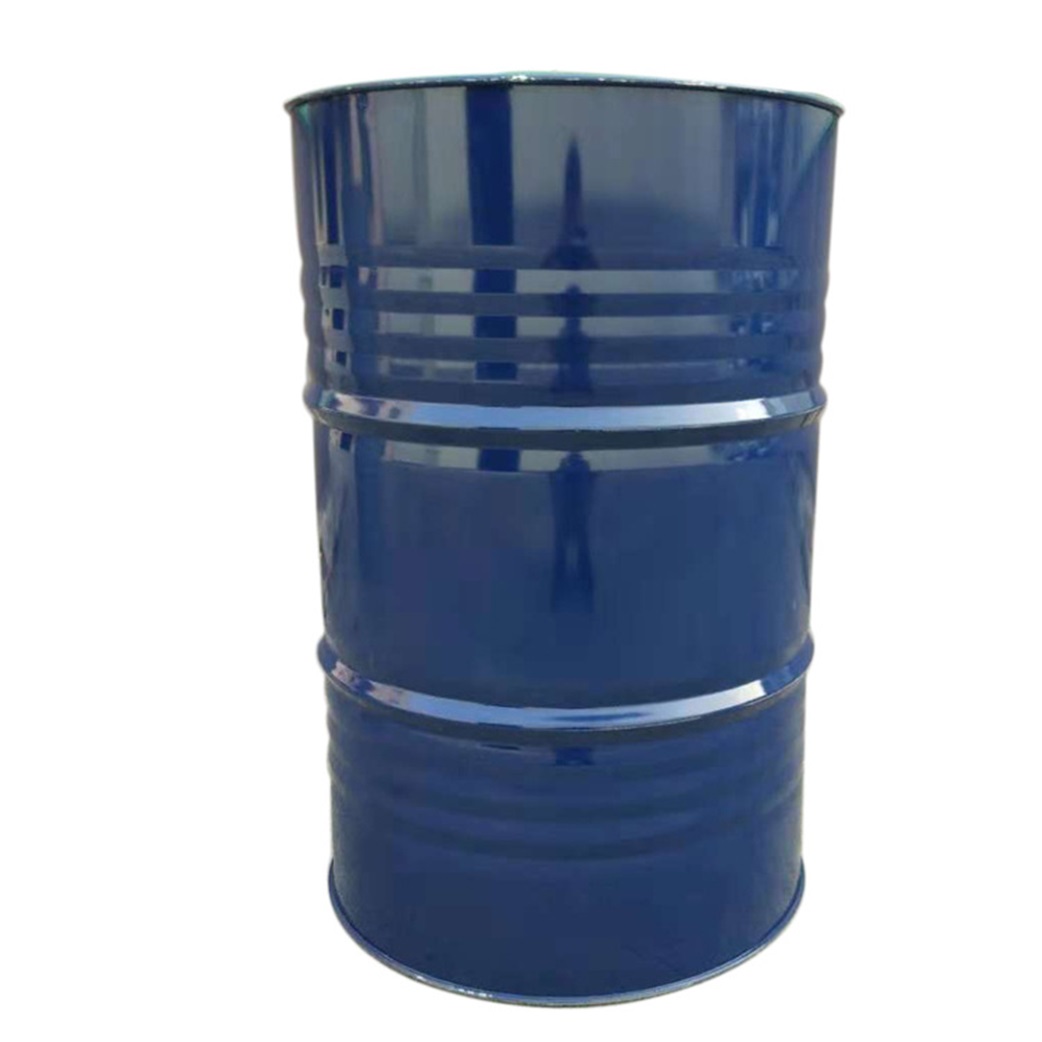
Packaging: drum package, in accordance with the company delivery arrangement for the order.
Storage: at least 12 months from the date of manufacture in the original packing at ambient temperatures. Store in a well-ventilated area, keep away from flames and direct sunlight, and close the cap tightly immediately after use.
Safety: all safety information is provided in the Material Safety Data Sheet. Use protective gloves and safety goggles during handling and refer to the MSDS for detailed requirements.
Leer más






 Red IPv6 compatible